Symbia Orthopedic Wedge Pillow - 4 Comfort Angles
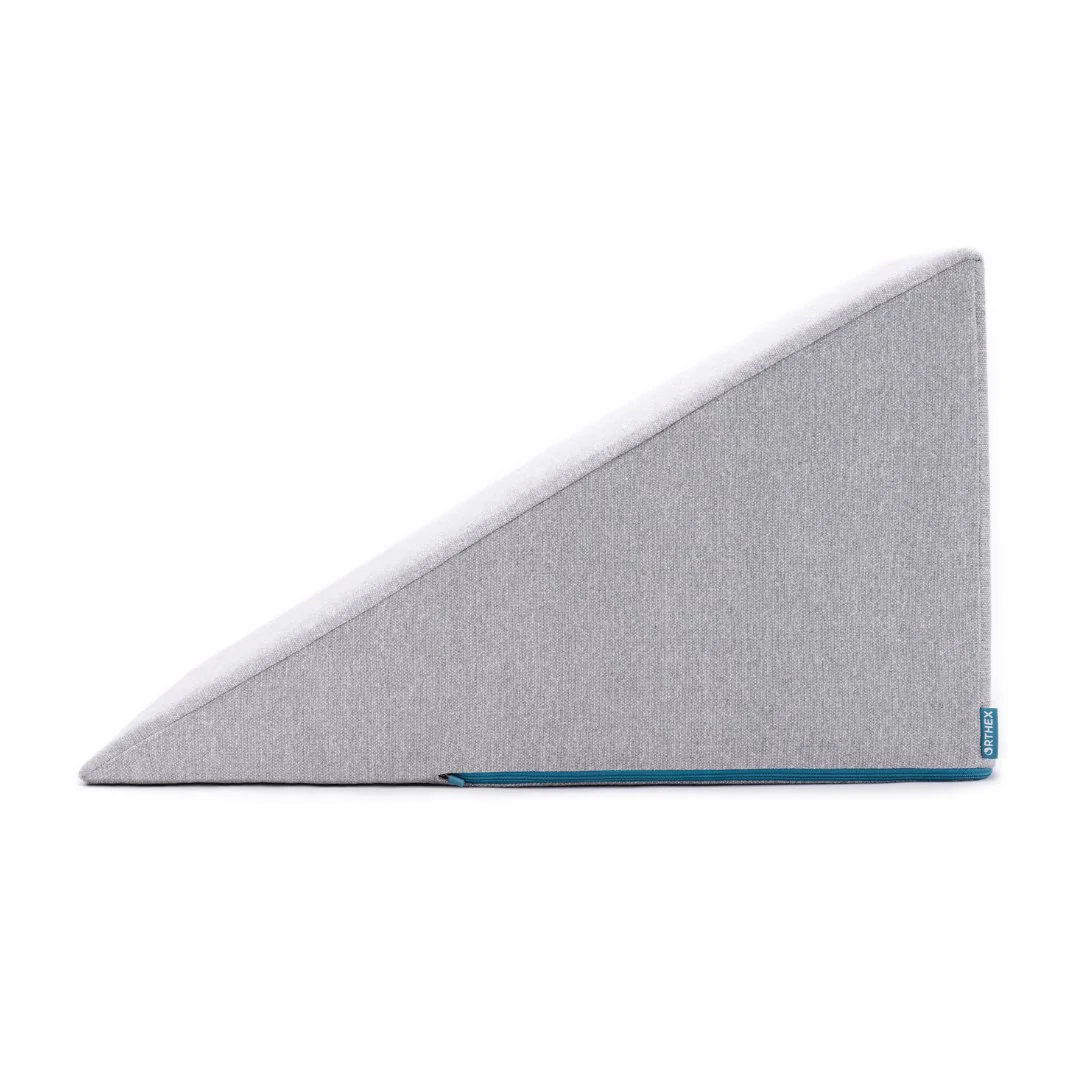
A wedge pillow is a therapeutic tool more than a comfort product. The Symbia comes in four elevation angles (14, 16, 23, and 30 degrees) because different conditions require different angles. Acid reflux generally needs 20-30 degrees of head elevation. Snoring and sleep apnea benefit from 20-30 degrees. Leg elevation for circulation or swelling calls for a different angle. This isn't a pillow you're buying for softness.
What Each Angle Is Best For
14 and 16 degrees are mild elevations. They're used for gentle head elevation, reading in bed, or mild acid reflux. 23 degrees suits most acid reflux and GERD applications, where research in Sleep Medicine Reviews has shown that head elevation of 20-30 degrees significantly reduces nighttime reflux symptoms. 30 degrees is the most aggressive elevation, used for post-surgical recovery, severe GERD, or conditions requiring substantial upper body elevation.
Choosing the right angle matters. More elevation is not always better. For snoring, for instance, a very steep angle can put the neck in an uncomfortable position that creates new problems. If you're unsure which angle applies to your situation, come in and talk to us, or consult your doctor or physiotherapist who can advise based on your specific condition.
Medical-Grade Foam That Holds Its Shape
The foam in the Symbia is firmer than comfort foam. A wedge pillow that compresses under body weight defeats its purpose, because the therapeutic elevation collapses during the night. Medical-grade foam maintains the angle regardless of body weight or sleep position shifts. It won't feel like a comfort pillow because it isn't one.
Many customers pair the wedge with a regular pillow on top for the head, which adds surface comfort without affecting the elevation. Browse our full pillow selection for compatible options. We also carry the Somnia 3.0 Posture Pillow for cervical support alongside the wedge, and have a full range of mattresses if you're doing a broader sleep assessment.
Visit Our Brantford Showroom
Mattress Miracle
441 1/2 West Street, Brantford, Ontario
Phone: (519) 770-0001
Hours: Mon-Wed 10-6, Thu-Fri 10-7, Sat 10-5, Sun 12-4
Not sure which elevation angle is right for your condition? Call us at (519) 770-0001 and we can help you figure it out.
Frequently Asked Questions
Which angle should I choose for acid reflux?
23 degrees is the most commonly recommended elevation for acid reflux and GERD. Research suggests that 20-30 degrees of head elevation significantly reduces nighttime reflux symptoms. The 30 degree option is for more severe cases or post-surgical recovery. Start at 23 degrees unless a healthcare provider has recommended otherwise.
Is a wedge pillow comfortable to sleep on all night?
It takes adjustment. Most people find the first few nights unfamiliar. By the end of the first week, the position tends to feel natural, especially as the relief from the condition it's addressing becomes apparent. Some people place a softer pillow on top of the wedge for the head portion.
Can a wedge pillow help with snoring?
Yes, for snoring caused by airway obstruction in the lying-flat position. Elevating the upper body opens the airway and reduces the vibration that causes snoring. This is a simple positional approach and works for many people. If snoring is related to sleep apnea, consult your doctor as additional treatment may be needed.
Can I use a wedge pillow for leg elevation?
Yes. Position the wedge under the legs rather than behind the back. Used this way, the 14 or 16 degree angles are typically sufficient for leg swelling and circulation. The 23 and 30 degree options work as well but may be more elevation than needed for legs specifically.
A wedge pillow is a therapeutic tool more than a comfort product. The Symbia comes in four elevation angles (14, 16, 23, and 30 degrees) because different conditions require different angles. Acid reflux generally needs 20-30 degrees of head elevation. Snoring and sleep apnea benefit from 20-30 degrees. Leg elevation for circulation or swelling calls for a different angle. This isn't a pillow you're buying for softness.
What Each Angle Is Best For
14 and 16 degrees are mild elevations. They're used for gentle head elevation, reading in bed, or mild acid reflux. 23 degrees suits most acid reflux and GERD applications, where research in Sleep Medicine Reviews has shown that head elevation of 20-30 degrees significantly reduces nighttime reflux symptoms. 30 degrees is the most aggressive elevation, used for post-surgical recovery, severe GERD, or conditions requiring substantial upper body elevation.
Choosing the right angle matters. More elevation is not always better. For snoring, for instance, a very steep angle can put the neck in an uncomfortable position that creates new problems. If you're unsure which angle applies to your situation, come in and talk to us, or consult your doctor or physiotherapist who can advise based on your specific condition.
Medical-Grade Foam That Holds Its Shape
The foam in the Symbia is firmer than comfort foam. A wedge pillow that compresses under body weight defeats its purpose, because the therapeutic elevation collapses during the night. Medical-grade foam maintains the angle regardless of body weight or sleep position shifts. It won't feel like a comfort pillow because it isn't one.
Many customers pair the wedge with a regular pillow on top for the head, which adds surface comfort without affecting the elevation. Browse our full pillow selection for compatible options. We also carry the Somnia 3.0 Posture Pillow for cervical support alongside the wedge, and have a full range of mattresses if you're doing a broader sleep assessment.
Visit Our Brantford Showroom
Mattress Miracle
441 1/2 West Street, Brantford, Ontario
Phone: (519) 770-0001
Hours: Mon-Wed 10-6, Thu-Fri 10-7, Sat 10-5, Sun 12-4
Not sure which elevation angle is right for your condition? Call us at (519) 770-0001 and we can help you figure it out.
Frequently Asked Questions
Which angle should I choose for acid reflux?
23 degrees is the most commonly recommended elevation for acid reflux and GERD. Research suggests that 20-30 degrees of head elevation significantly reduces nighttime reflux symptoms. The 30 degree option is for more severe cases or post-surgical recovery. Start at 23 degrees unless a healthcare provider has recommended otherwise.
Is a wedge pillow comfortable to sleep on all night?
It takes adjustment. Most people find the first few nights unfamiliar. By the end of the first week, the position tends to feel natural, especially as the relief from the condition it's addressing becomes apparent. Some people place a softer pillow on top of the wedge for the head portion.
Can a wedge pillow help with snoring?
Yes, for snoring caused by airway obstruction in the lying-flat position. Elevating the upper body opens the airway and reduces the vibration that causes snoring. This is a simple positional approach and works for many people. If snoring is related to sleep apnea, consult your doctor as additional treatment may be needed.
Can I use a wedge pillow for leg elevation?
Yes. Position the wedge under the legs rather than behind the back. Used this way, the 14 or 16 degree angles are typically sufficient for leg swelling and circulation. The 23 and 30 degree options work as well but may be more elevation than needed for legs specifically.
Original: $67.61
-70%$67.61
$20.28Description
A wedge pillow is a therapeutic tool more than a comfort product. The Symbia comes in four elevation angles (14, 16, 23, and 30 degrees) because different conditions require different angles. Acid reflux generally needs 20-30 degrees of head elevation. Snoring and sleep apnea benefit from 20-30 degrees. Leg elevation for circulation or swelling calls for a different angle. This isn't a pillow you're buying for softness.
What Each Angle Is Best For
14 and 16 degrees are mild elevations. They're used for gentle head elevation, reading in bed, or mild acid reflux. 23 degrees suits most acid reflux and GERD applications, where research in Sleep Medicine Reviews has shown that head elevation of 20-30 degrees significantly reduces nighttime reflux symptoms. 30 degrees is the most aggressive elevation, used for post-surgical recovery, severe GERD, or conditions requiring substantial upper body elevation.
Choosing the right angle matters. More elevation is not always better. For snoring, for instance, a very steep angle can put the neck in an uncomfortable position that creates new problems. If you're unsure which angle applies to your situation, come in and talk to us, or consult your doctor or physiotherapist who can advise based on your specific condition.
Medical-Grade Foam That Holds Its Shape
The foam in the Symbia is firmer than comfort foam. A wedge pillow that compresses under body weight defeats its purpose, because the therapeutic elevation collapses during the night. Medical-grade foam maintains the angle regardless of body weight or sleep position shifts. It won't feel like a comfort pillow because it isn't one.
Many customers pair the wedge with a regular pillow on top for the head, which adds surface comfort without affecting the elevation. Browse our full pillow selection for compatible options. We also carry the Somnia 3.0 Posture Pillow for cervical support alongside the wedge, and have a full range of mattresses if you're doing a broader sleep assessment.
Visit Our Brantford Showroom
Mattress Miracle
441 1/2 West Street, Brantford, Ontario
Phone: (519) 770-0001
Hours: Mon-Wed 10-6, Thu-Fri 10-7, Sat 10-5, Sun 12-4
Not sure which elevation angle is right for your condition? Call us at (519) 770-0001 and we can help you figure it out.
Frequently Asked Questions
Which angle should I choose for acid reflux?
23 degrees is the most commonly recommended elevation for acid reflux and GERD. Research suggests that 20-30 degrees of head elevation significantly reduces nighttime reflux symptoms. The 30 degree option is for more severe cases or post-surgical recovery. Start at 23 degrees unless a healthcare provider has recommended otherwise.
Is a wedge pillow comfortable to sleep on all night?
It takes adjustment. Most people find the first few nights unfamiliar. By the end of the first week, the position tends to feel natural, especially as the relief from the condition it's addressing becomes apparent. Some people place a softer pillow on top of the wedge for the head portion.
Can a wedge pillow help with snoring?
Yes, for snoring caused by airway obstruction in the lying-flat position. Elevating the upper body opens the airway and reduces the vibration that causes snoring. This is a simple positional approach and works for many people. If snoring is related to sleep apnea, consult your doctor as additional treatment may be needed.
Can I use a wedge pillow for leg elevation?
Yes. Position the wedge under the legs rather than behind the back. Used this way, the 14 or 16 degree angles are typically sufficient for leg swelling and circulation. The 23 and 30 degree options work as well but may be more elevation than needed for legs specifically.